Essential Construction & Lexicon
Introduction
In this document I start explaining construction, in which one attemps to build method for drawing objects at all various kinds of angles with more realistic projections.
I might make the structure of this similar to music-theory.net, I love that website, it's where I learned the basics of music theory.
Table of Contents:
* Tools
* Scaffolding
* Tracing
Tools
I recommend:
* thicker sketch paper, I never recommend thin paper haha, tears, becomes wavey, pools, horrible
* Pencil-sharpener, use under running water, the dust is hell.
* 2b pencils(Sketching is always done with pencil!!!!)
* Strong eraser
* Ruler
* Pen grip(increases accuracy a lot)
!Scaffolding!(Extremely important chapter)
Scaffolding exercises are the most important part of learning construction.
The bigger shape/gesture/skeleton of any object must first be drawn, then the smaller gestures/shapes.
I like to mix using shapes and skeletons, I don't just use one, which ever is most useful in the context.
Don't try to find the perfect method, use the method for the context.
* Sharpen and convex edges with color pencils, I really don't like round corners/edges
* Remember construction sketching is a SKETCH, let the guidelines stay for now! don't remove them!
* Keep in mind which side is currently dominant when drawing an object and focus on that.
* I prefer polygons to round shapes, easier to understand/orient oneself to.
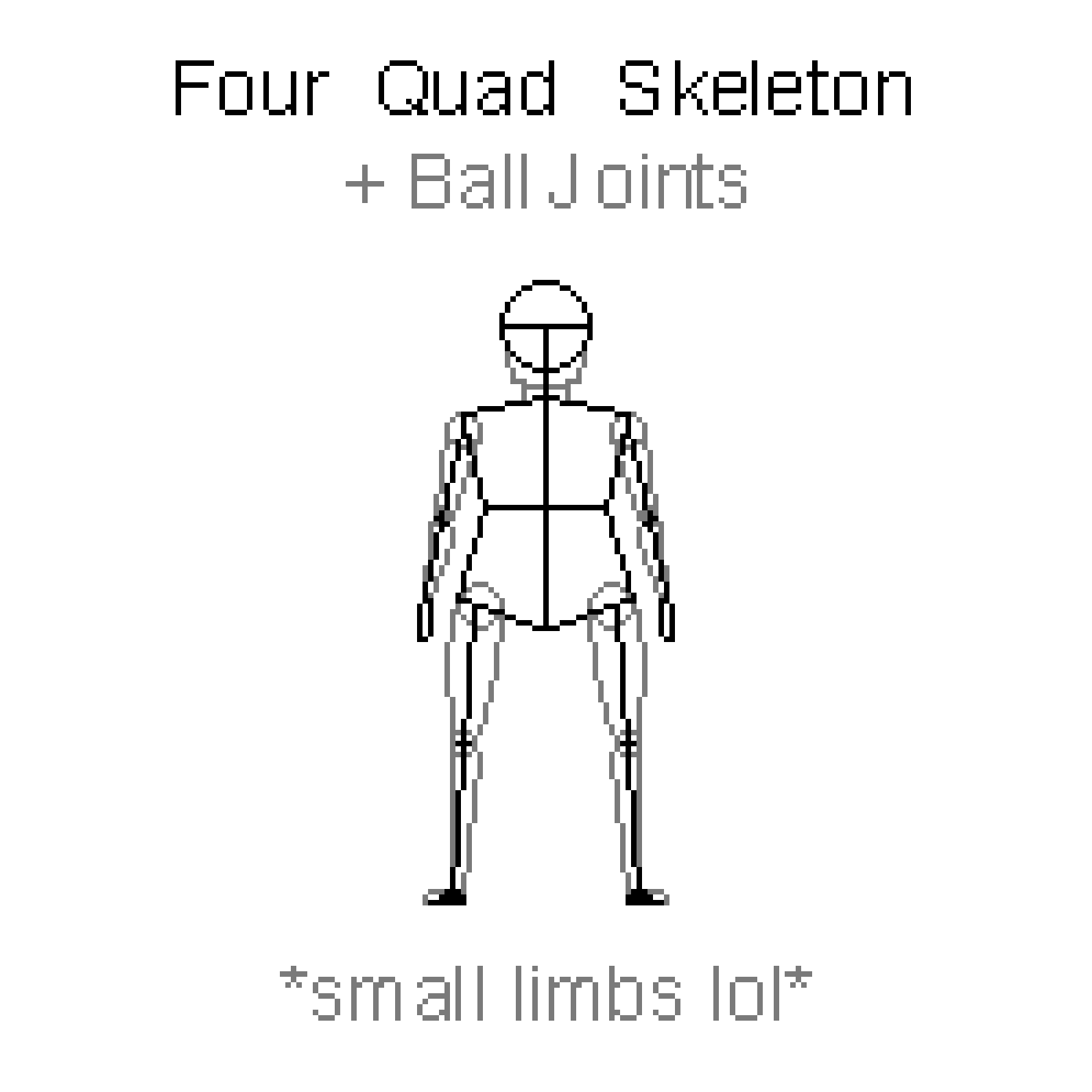
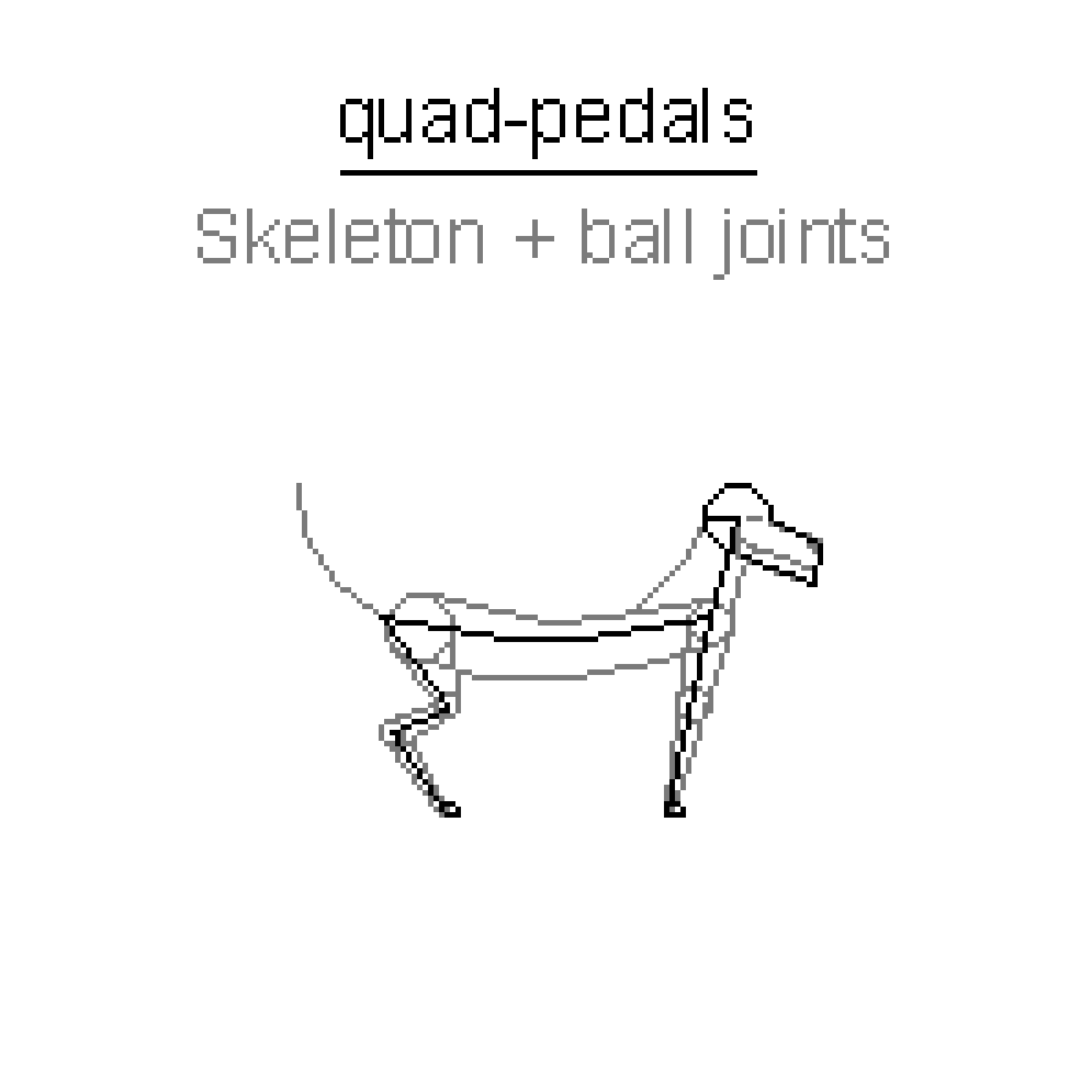
* Skeleton
* Silhuette
* Polygon
* !!!!!!!Rounded polygonism!!!!!!(often easier to understand, especially for heads at odd angles, I mostly make everything out of rounded boxes)
* coiling
* !!Ball Joints!!
Inspo: Sycra
Tracing/reference
Tracing/referencing means you follow an underlying reference photo to copy the object precisely.
I like to measure the lengths on reference photos.
Can't draw an object without measuring it lol.
Not sure why that isn't said more.
I mostly measure in real scale units, not on-paper-scale units.